- 88 Posts
- 91 Comments





 0·2 years ago
Chinese orgs love signing MOUs
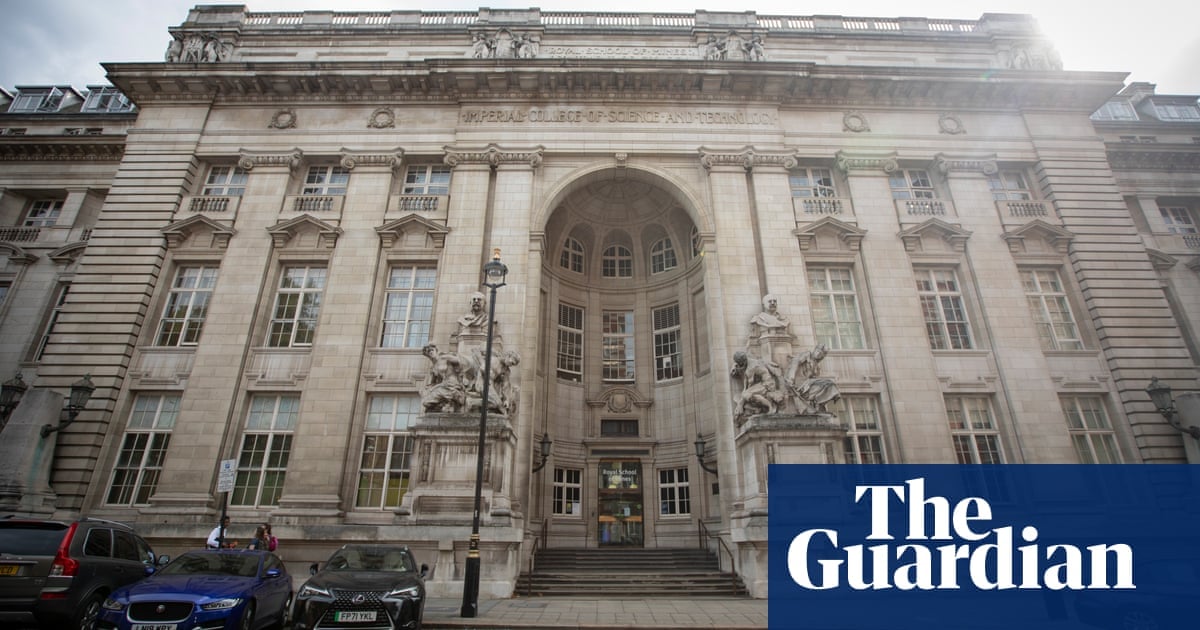
The CCP - or, better, the China Scholarship Council (CSC) under the rule of the CCP - forces Chinese students and researchers to sign ‘loyalty pleadges’ before giong abroad saying they “shall consciously safeguard the honor of the motherland, (and) obey the guidance and management of embassies (consulates) abroad.” The restrictive scholarship contract requires them to report back to the Chinese embassy on a regular basis, and anyone who violates these conditions is subject to disciplinary action.
In one investigation,
Mareike Ohlberg, a senior fellow working on China at the German Marshall Fund, sees the CSC contract as a demonstration of the Chinese Communist Party’s “mania for control.”
“People are actively encouraged to intervene if anything happens that might not be in the country’s interest,” Ohlberg said.
Harming China’s interests is in fact considered the worst possible breach of the contract.
“It’s even listed ahead of possible involvement in crimes, so effectively even ahead of murder,” she noted. “China is making its priorities very clear here.”
[…] Kai Gehring, the chair of German parliament’s Committee for Education and Research, says the CSC contracts are “not compatible” with Germany’s Basic Law, which guarantees academic freedom.
In Sweden, for example, universities have already cancelled the collaboration with the CSC over this practice.
There is ample evidence that China uses scientific collaboration with private companies as well as universities and research organizations for spying. You’ll find many independent reports on that as well as of the CCP’s intimidation practices of Chinese students who don’t comply with the party line, e.g., in Australia and elsewhere. It’s easy to find reliable sources on the (Western) web.



 3·2 years ago
Removed by mod
A few statements are very illuminating. UniCredit ‘set aside EUR 800m in provisions’, which means they didn’t pay taxes for this sum (assuming the Russian accounting law has the same principles as everywhere else which seems reasonable here), so they might have predicted the Russian move anyway.
Another point is that they report a profit for Q1-2024 that is more than double than that in Q1-2023. I would be curious to see more numbers to learn how they ‘significantly reduced’ their bussines.
This is why Russia has to leave Ukraine.
They may come from one of the sources you list in your comment above :-)
In Germany -as anywhere else- there is much more. You may be interested in this, for example:
Which German websites help disseminate pro-Russian narratives (here is the alternative archived link)
After our research on which websites are spreading pro-Russian narratives and talking points that benefit Moscow, we decided to take a closer look at websites in German. During the analysis, we found publications that quote Russian state media, that receive back quotes from them, and that spread claims that could play into the hands of the Kremlin.
[…]
It is clear that Russia is waging a war of propaganda and disinformation against Europe, whereas it is waging a real war against Ukraine, seizing its territories. An analysis of key Kremlin media narratives in different languages reveals that their campaign’s main goal is to force the West to stop supporting Ukraine and make concessions to Putin, probably by giving him the occupied territories and thus recognizing the redrawing of borders in Europe by military means.
News websites that tend to support pro-Russian, Euroskeptic, and anti-American views, as well as those close to the positions of right-wing radical parties, often pick up such narratives. Consciously or unconsciously, such web resources play into the hands of the Kremlin’s agenda. Such news reports are becoming a tool for spreading Russian and pro-Russian influence in Europe.
Ukraine is on an “irreversible path” to NATO, support will continue, Secretary General says in Kyiv
On membership, [NATO Secretary General] Stoltenberg said: “Ukraine’s rightful place is in NATO. Ukraine will become a member of NATO. The work we are undertaking now puts you on an irreversible path towards NATO membership, so that when the time is right, Ukraine can become a NATO member straightaway.”
G7 countries slam Chinese firms’ support for Russia’s defence industry
As they ended their meeting on Capri, the G7 ministers said transfers of such material [such as machine tools, semiconductors, other dual-use items that have helped Russia rebuild the defence industrial base] from Chinese companies were being used by Russia “to advance its military production”.
“This is enabling Russia to reconstitute and revitalise its defence industrial base, posing a threat both to Ukraine and to international peace and security,” they said, calling on China to stop its backing “as it will only prolong this conflict and increase the threat that Russia poses to its neighbours”.
Here’s another article about it: https://www.theguardian.com/us-news/2024/apr/17/mike-johnson-oust-foreign-aid-ukraine-republican
This applies not only to oil and gas but to any industry. And let us not forget politicians working on new legislations that will likely support particular companies. Just buy call options and you are fine.
The President of Renew Europe, Valérie Hayer, has written to President of the European Parliament, Roberta Metsola, calling for the launch of an immediate and transparent investigation, in cooperation with national authorities, to uncover the scale of the influence operation conducted by Russia within the European Parliament and allegations of potential corruption. Disciplinary action must be swiftly taken against any MEPs or candidates involved.
[…]
‘European voters need to know if their MEPs or candidates in the upcoming elections are working with the support of Russia or its proxies. Democracy in Europe must be defended from external threats at all costs,’ [Ms. Hayer wrote.]
Whenever I think Putin has reached the absolute bottom of human dignity he teaches me wrong and sinks even deeper.
The fight is continuing’: a decade of Russian rule has not silenced Ukrainian voices in Crimea
Amid the shaky security situation, Russia’s crackdown on dissent in Crimea, which has been ruthless since 2014, has risen to a new level. As well as the continuing persecution of activists from the Crimean Tatar minority, traditionally largely pro-Ukrainian, Russia’s police and FSB security service have rounded up local people who post Ukrainian-language songs on their social media profiles or express pro-Ukraine views in public.
[…]
Crimean Smersh offers people the chance to denounce their friends and neighbours for “anti-Russian” behaviour. Users can message a secure Telegram bot to send information about such incidents. The channel then posts videos of police raids on people’s houses, and frequently adds mumbled on-camera “confessions” and “apologies” from those accused of being pro-Ukraine.
[…]
Olha Skrypnyk, chair of the Crimean Human Rights Group, said that the first major Russian drone attacks on Kyiv in October 2022, which were proudly broadcast on Russian television, were a wake-up call for many in Crimea who had previously believed Russia was not attacking civilian infrastructure in Ukraine.
[…]
“I think it’s important to show the Ukrainian-minded people in Crimea that we didn’t give up on their freedom,” she said.
It won’t turn around U.S. politics in a day, but for a change it is necessary to speak out. I don’t know this person, but as he is retiring he could have remained silent. But he didn’t, speaking up and telling U.S. media that ‘it’s embarrassing to be a Republican’.
I hope others will follow suit.
Yes, there is much evidence of fear as the principal response to threat with direct impact on decision making. There’s vast amount of literature about it, one thing I quickly found is a piece written by political scientist George Marcus, emeritus professor of political science at Williams College:
… increasing fear reduces the influence of otherwise salient political dispositions, and that fearful citizens will be less influenced by their partisan attachments or their ideological convictions.
There is a rich empirical literature that seems to confirm the conventional account that fear causes people to seek strong conservative leaders and to endorse authoritarian policies and parties.
An important piece of communication here is the creation of an enemy - the migrants, the refugees, the West, the Nato, … It works (and has been working) in all human societies.





I posted this elsewhere already, but it also fits here goven many of the posts in this thread: It is not just about data/privacy concerns (which are underestimated imo, as China pursues an own agenda with collecting your data through Chinese tech) and ‘unfair’ subsidies, but about gross human rights violations.
In short, some parts of the cheap Chinese cars are made in concentration camps where people are forced to work under catastrophic conditions.